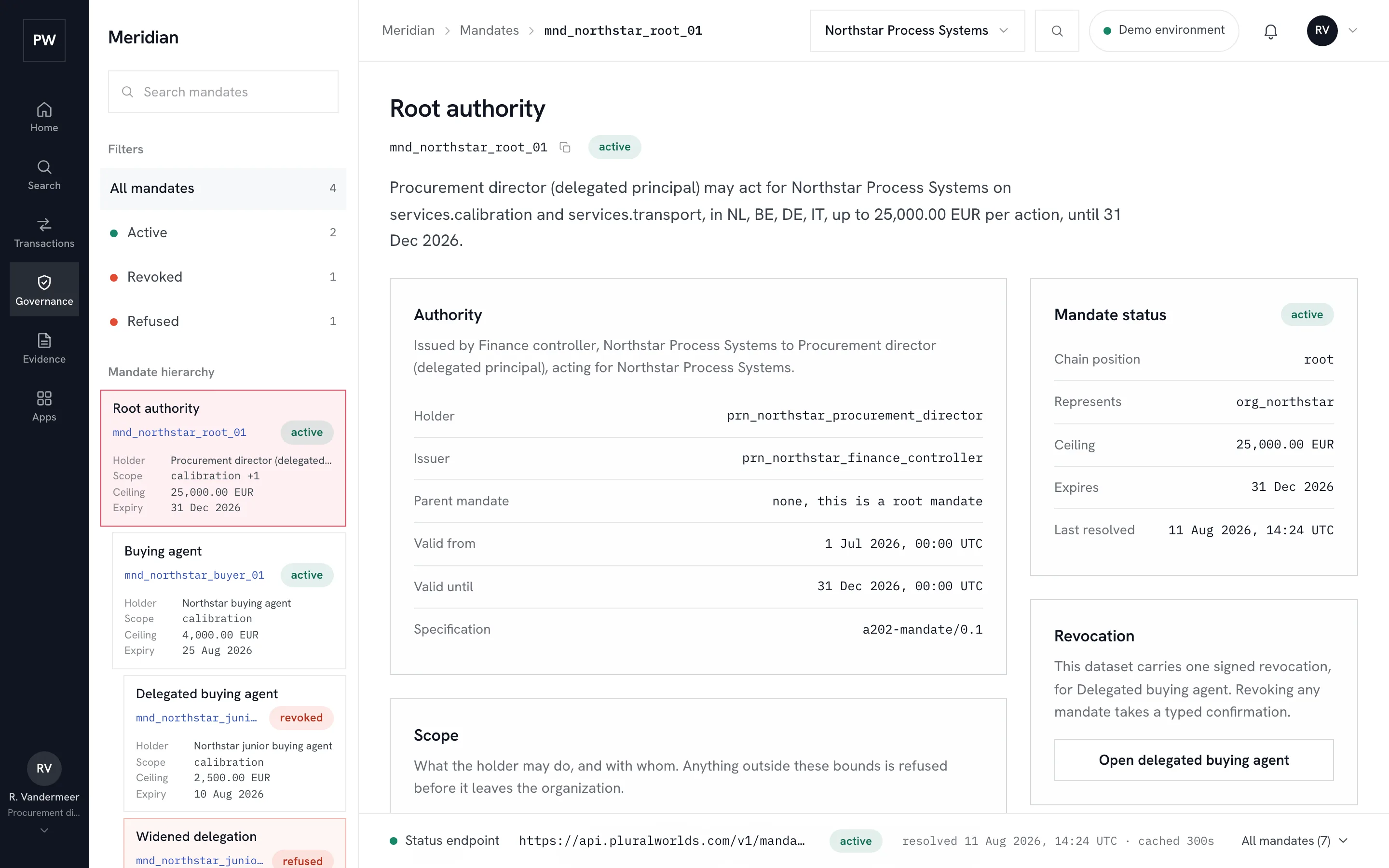
Delegate a first commercial task to an agent
Define which suppliers the agent may contact, which terms it may change, its spending limit, and which decisions still need a person. Every action is checked against that mandate.
Authority

Concordia · Governed transactions
Concordia is shared ground. Plural Worlds acts for neither side, and each organization keeps its own systems, data, and decision rights.
Workflows where an agent could create a real obligation, and where a missing approval, leaked bid, or incomplete record would matter.
Define which suppliers the agent may contact, which terms it may change, its spending limit, and which decisions still need a person. Every action is checked against that mandate.
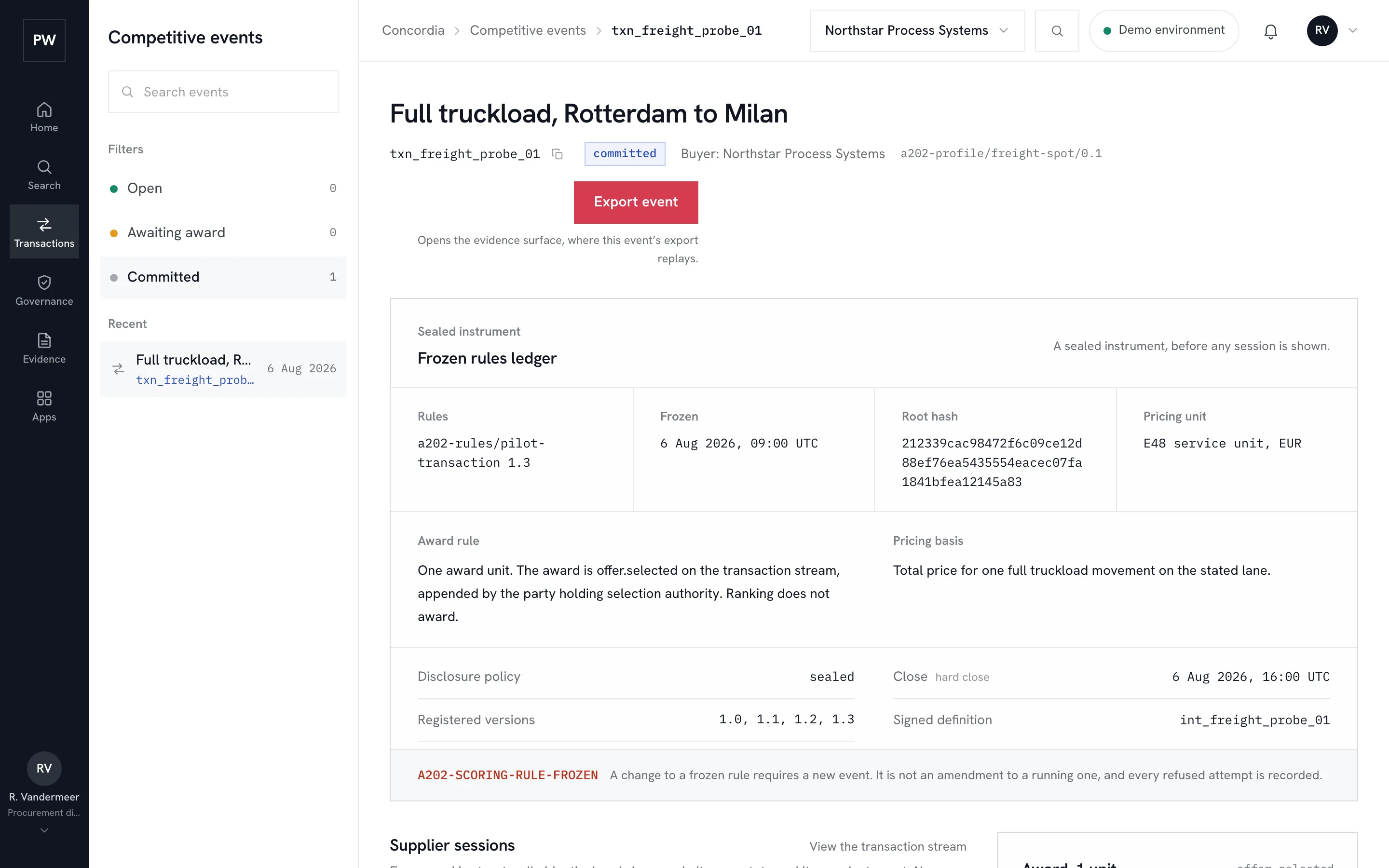
Invite several suppliers under the same rules while each session stays separate. Suppliers see only their own activity, and the buyer discloses only what the rules permit.
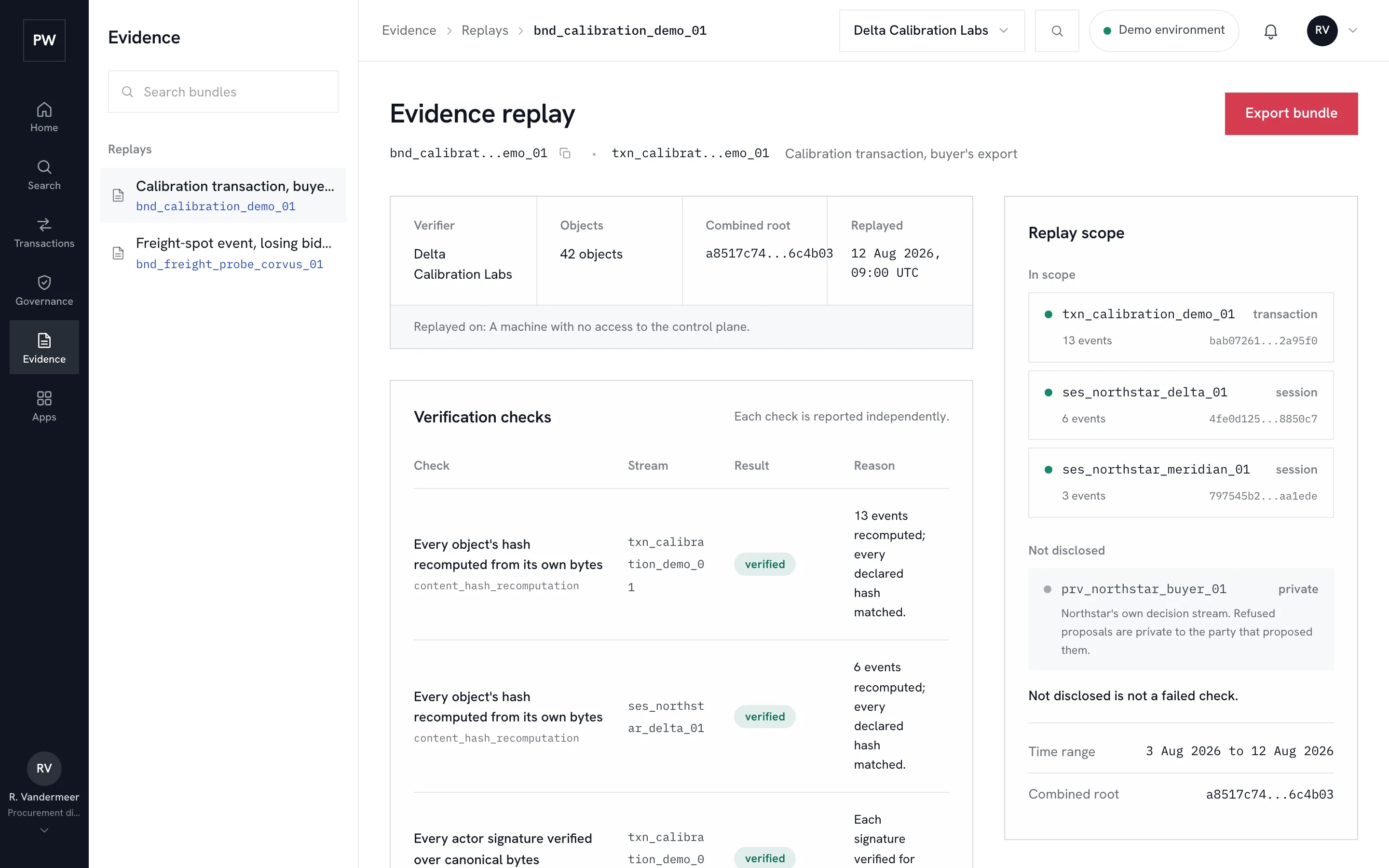
Export the authority proofs, signed events, rules, approvals, and final commitment. A reviewer can reconstruct what happened without screenshots or recollection.
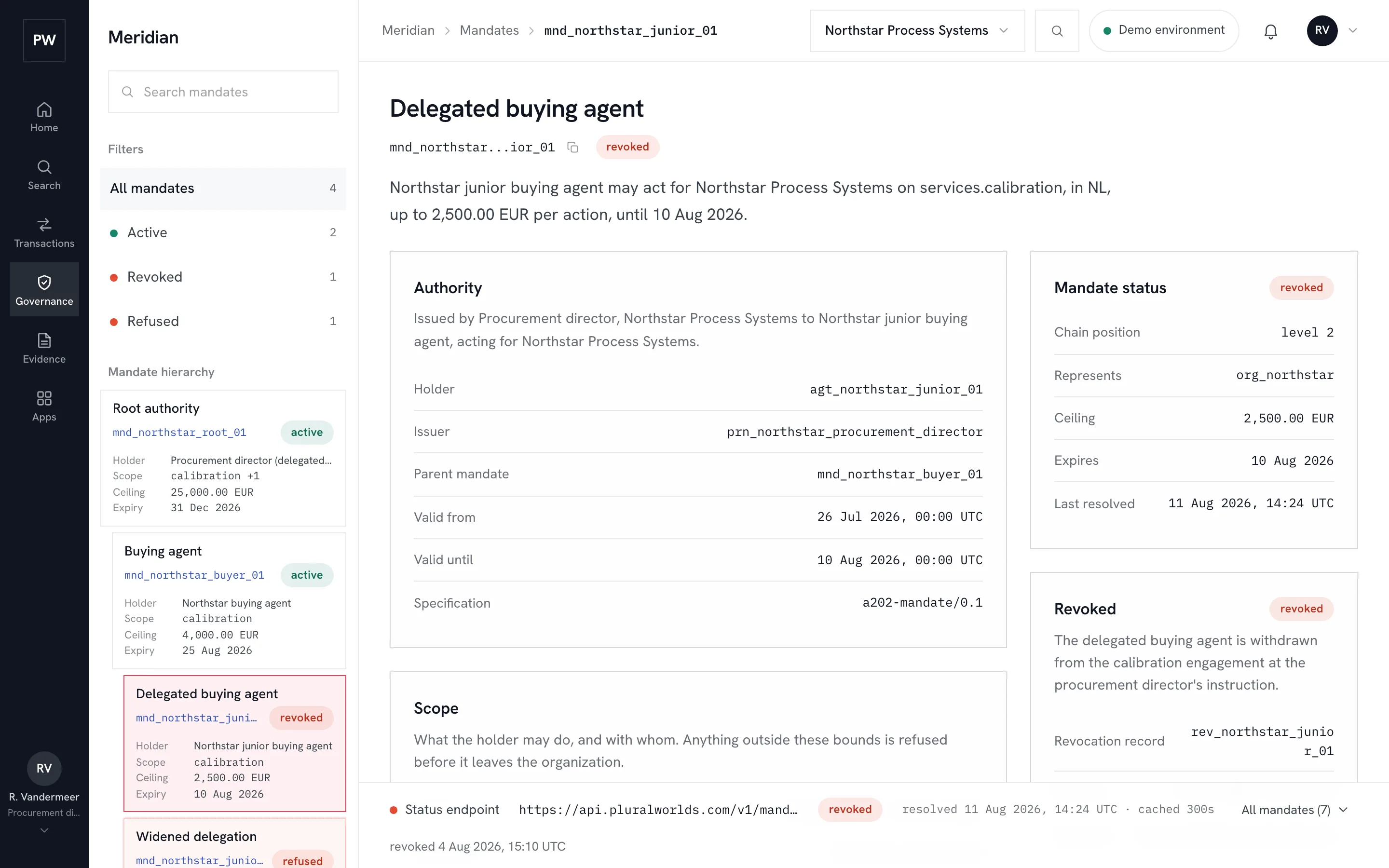
Revoke an agent's mandate and confirm its next offer, approval, or commitment is refused at once. The control is tested inside the live workflow.
A year later, the record should still be clear to procurement, legal, and audit.
How a transaction runs
Nothing binds either organization until both sign the same commitment object.
A named organization enters a defined engagement. Its agent must show authority its own organization issued before it can act.
Financial limits, permitted disclosures, deadlines, and required approvals are fixed before consequential work begins.
Offers, revisions, approvals, and awards are recorded in order. Separate sessions keep one counterparty from learning about another.
The result binds only when both organizations sign the same commitment. Either side can then export the record.
What is included
Each counterparty negotiates in its own signed session. No participant learns about another from content, sequence numbers, timing, or errors.
Bids are submitted under verified authority, the rules freeze when bidding opens, and one award is made per unit. A losing bidder can verify that its session stayed isolated.
A counterparty with no agent of its own can join one named transaction. We can hold its signing key, and every act needs a human approval bound to that action. The invited side never pays.
Every completed transaction produces a signed record either organization can export and verify without our systems. Longer retention is available where statute requires it.
A determination can be contested through a defined route. Raising a dispute is free, and no fee depends on an outcome.
Concordia runs hosted, or inside an agreed infrastructure or regional boundary where security or regulation demands it. Both produce the same record.
How a counterparty enters, what it can see while the work is active, and what both organizations must sign before the result binds. All solutions
An invitation gives access to one named engagement and nothing else. The agent must show authority from its own organization before it can offer or commit.
Issuing authority
Reading scope
Matching key
Awaiting check
Each supplier submits signed offers in a separate session. The rules are fixed before bidding opens, and no supplier can see another's participation, timing, or price.
Buyer and supplier sign the same commitment object. The record keeps the authority, offers, approvals, and terms behind it, so either side can verify the result later.
Preparing
Preparing
One canonical hash
sha-256 · rfc 8785 · 2 signatures
Objects
41
Replay
consistent
Access
none needed
After the work ends, the signed record remains available for review.

A business team, procurement team, legal reviewer, auditor, or counterparty can trace the authority, offers, approvals, applicable rules, and final commitment from the same shared record.