Counterparty admission checks
Before a counterparty's agent acts, its authority chain is resolved and every link checked for validity, scope, expiry, and revocation. Missing evidence reads as unassessed.
chain resolvedevery link checked

Meridian · Commercial authority
Meridian replaces the delegation table in spreadsheets and inboxes with mandates that are signed, revocable, and checked at the moment an agent acts. It asks nothing of your counterparties.
Inside your own organization
Today it lives in a policy document, a spreadsheet, and the memory of the people who approve things. Meridian turns each grant into an object a system checks before the action.
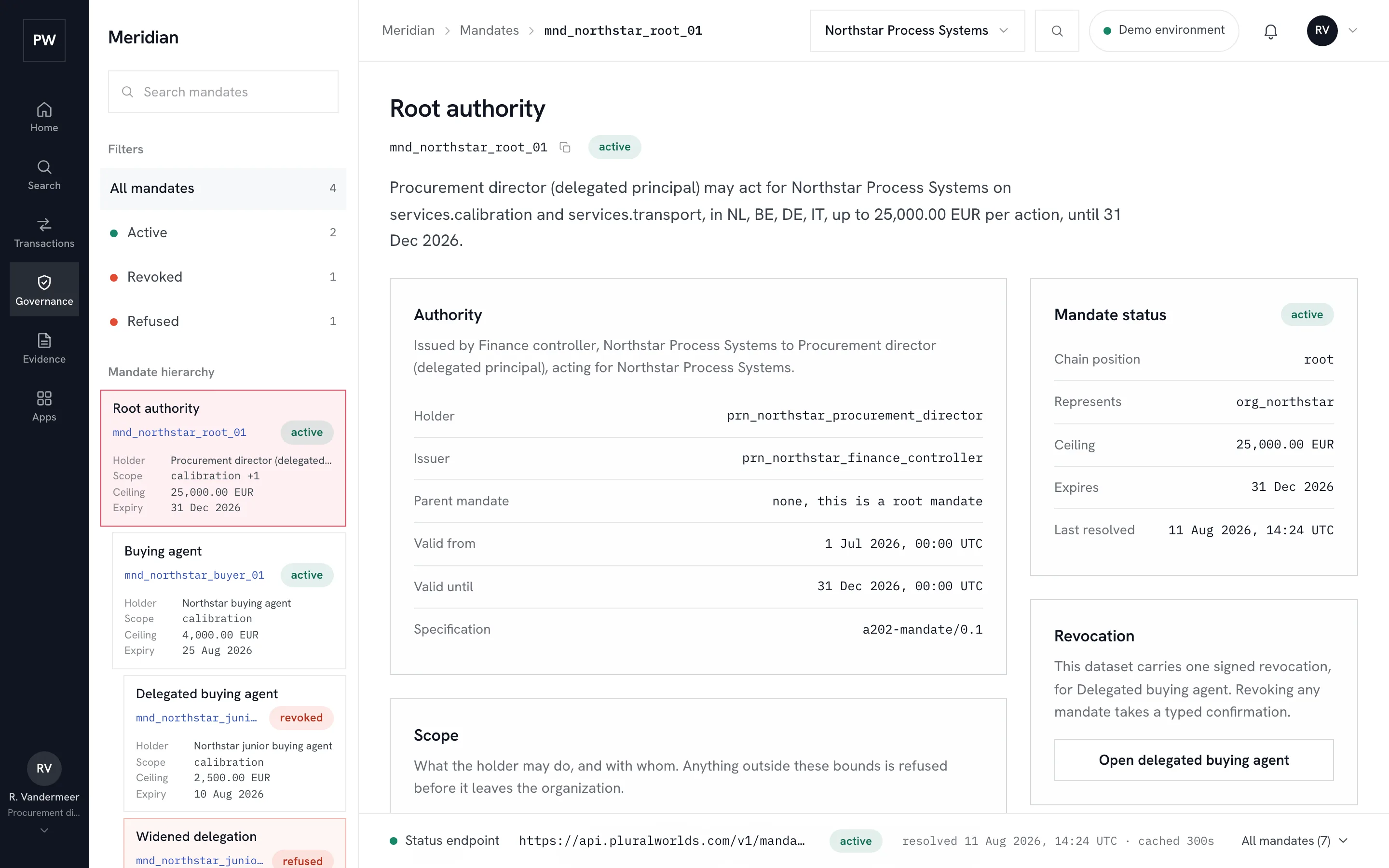
A principal states what an agent may do: scope, ceiling, counterparties, validity period. The mandate is a signed object, so what was permitted at any moment can be established later.
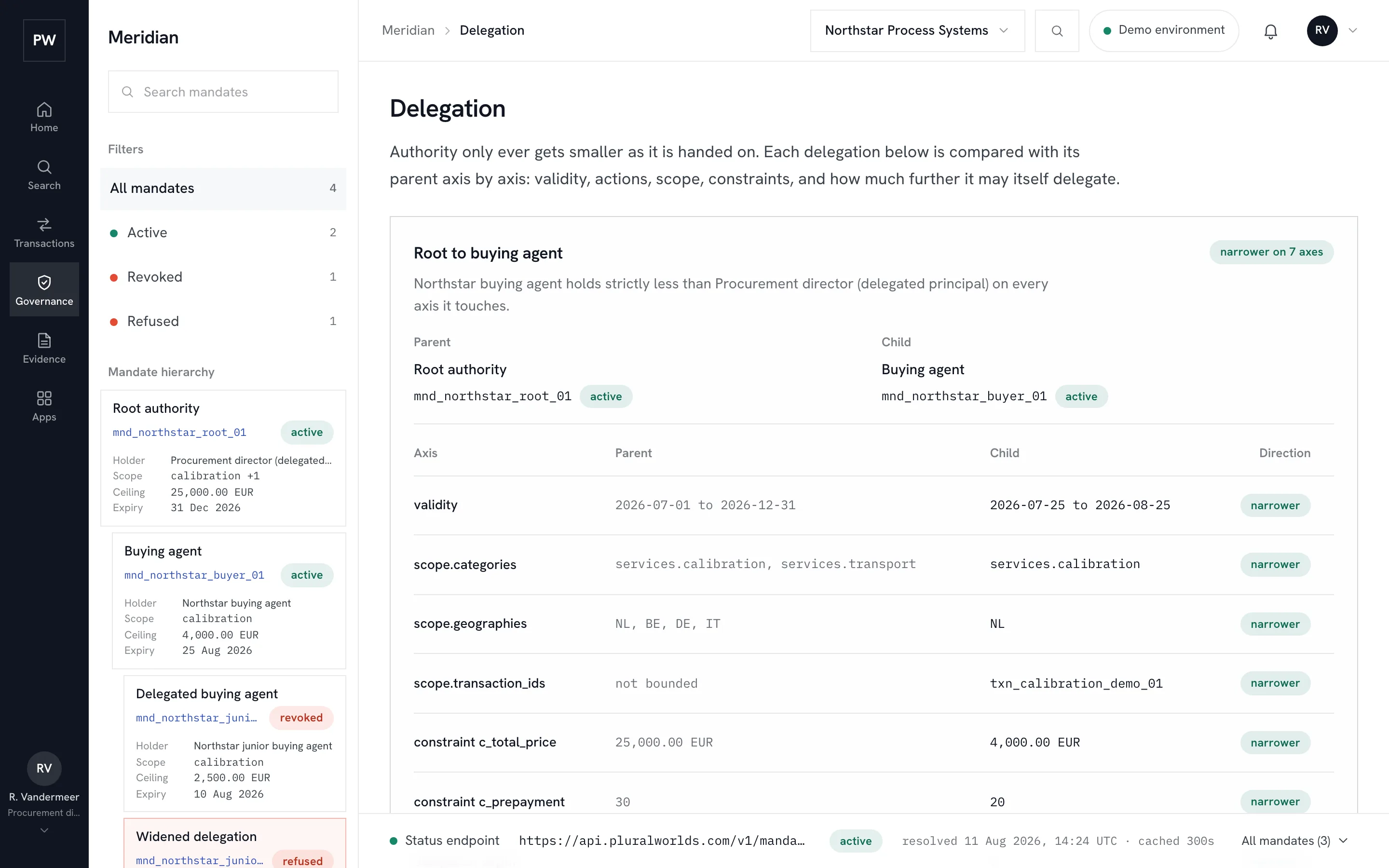
Authority passes down a chain and each link can only narrow. A delegate never holds more scope, budget, or time than its parent.
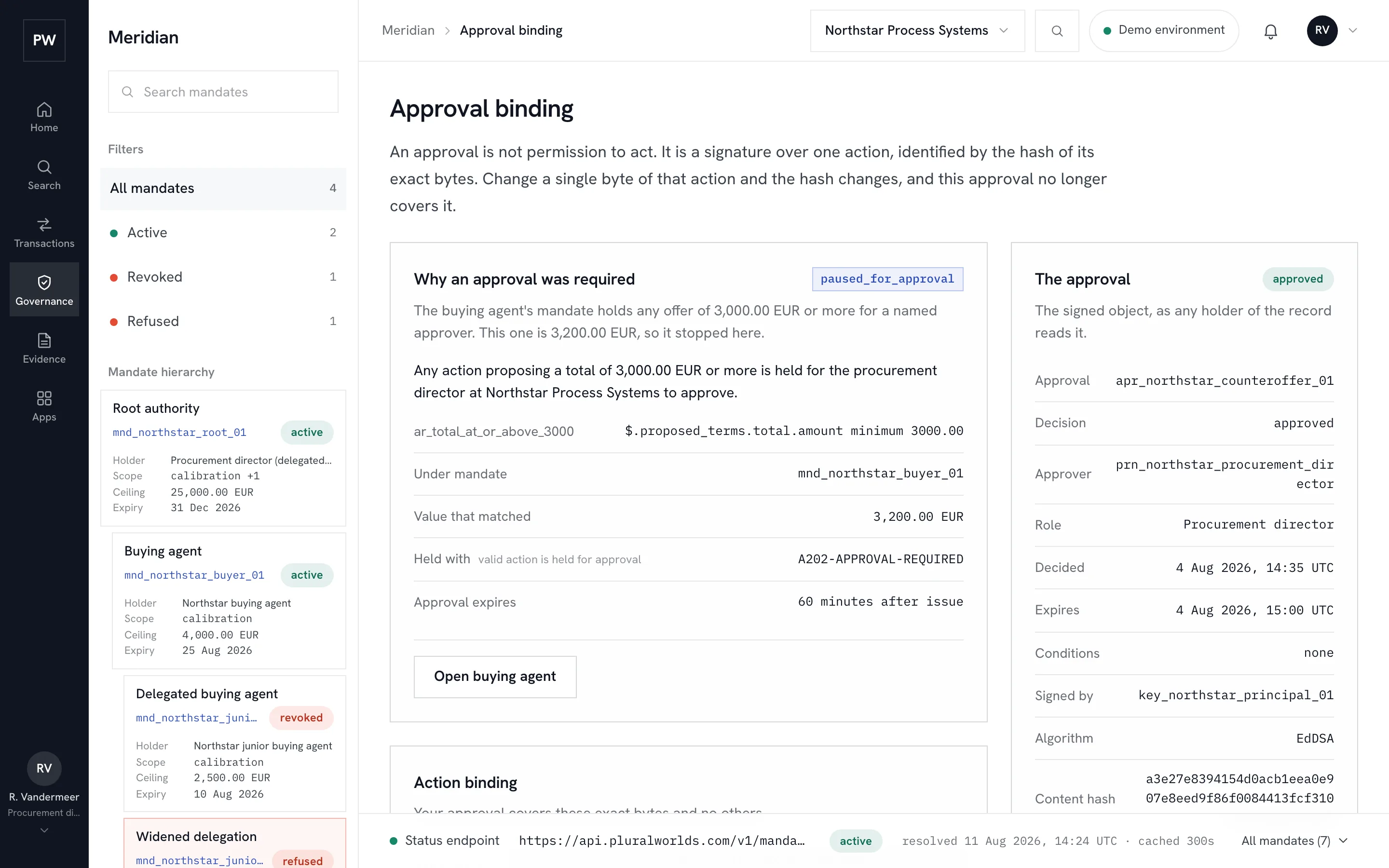
Where a decision needs a person, the approval is signed over the exact action. Change one byte and it no longer applies.
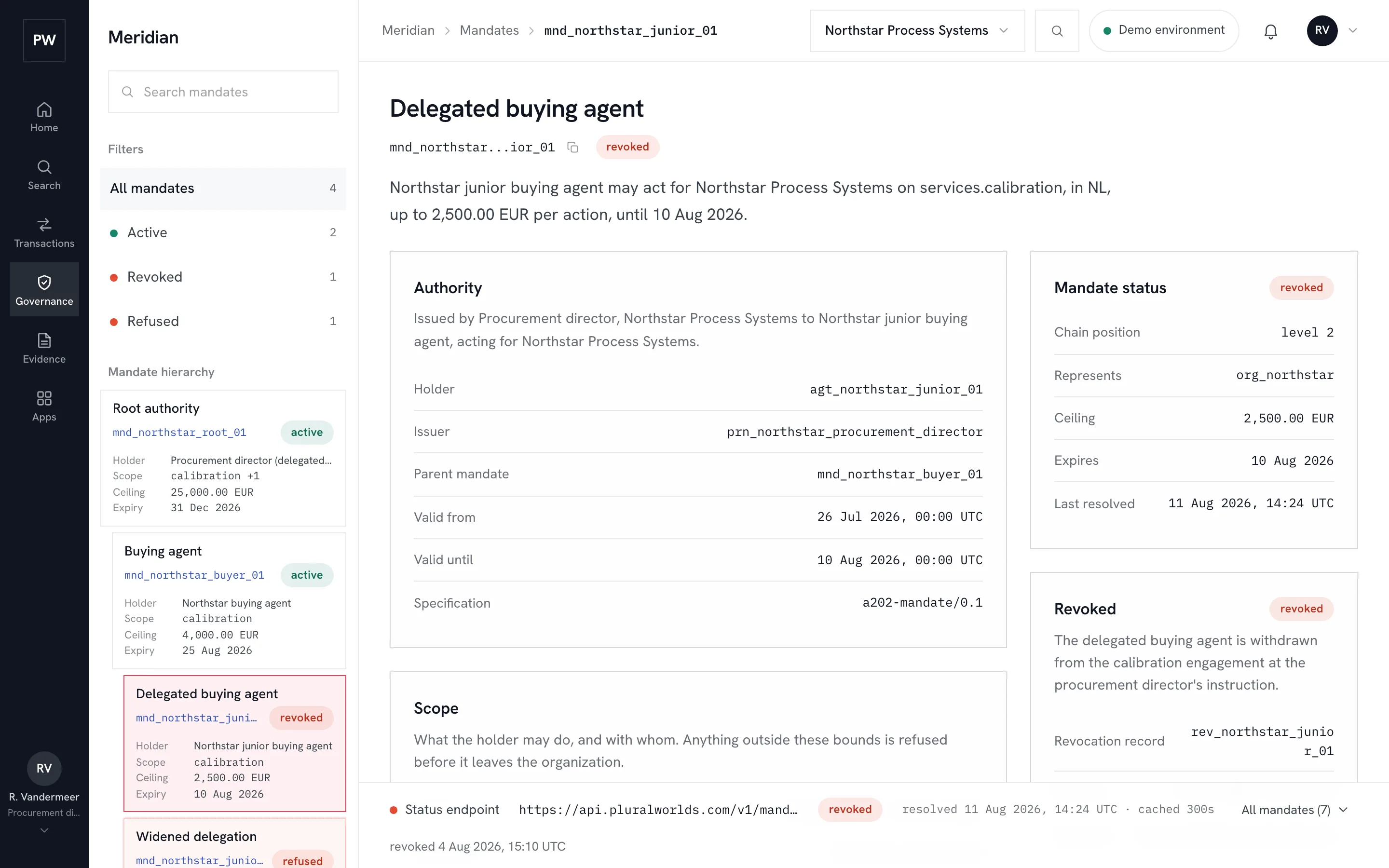
Suspension and revocation publish to a live status endpoint. A relying party that cannot reach it refuses, so revoked authority stops acting even when systems fail.
Facing the other side
Meridian checks a counterparty's standing before its agent is admitted, and keeps checking after, so an expiry or revocation on their side never passes silently on yours.
Before a counterparty's agent acts, its authority chain is resolved and every link checked for validity, scope, expiry, and revocation. Missing evidence reads as unassessed.
Mandates, status endpoints, and grades are re-checked while the engagement runs, including expiry at a new specification version. An expired grade fails like a failed one.